The Indian stock market has seen significant growth over the last few decades, providing various investment opportunities for individuals and institutional investors alike. Among the most prominent methods of raising capital for companies is the Initial Public Offering (IPO). Through an IPO, a private company offers its shares to the public for the first time, allowing individuals to become shareholders in a business they previously could only observe from a distance.
This blog post will delve into the IPO process in India, explore the different platforms available to investors, and compare its benefits over traditional investment options such as direct stock purchases, mutual funds, and fixed deposits.
What is an IPO?
An IPO, or Initial Public Offering, is the process through which a privately held company sells its shares to the public for the first time. This move marks the company’s transition from a privately owned entity to a publicly traded one. The primary purpose of an IPO is to raise capital for the company, which can be used for various purposes such as business expansion, debt repayment, or acquisitions.
In India, IPOs are regulated by the Securities and Exchange Board of India (SEBI), which ensures that the entire process is transparent and fair for investors. Once the company completes the IPO process, its shares are listed on the stock exchanges like the Bombay Stock Exchange (BSE) or the National Stock Exchange (NSE), making them available for trading.
The IPO Process in India
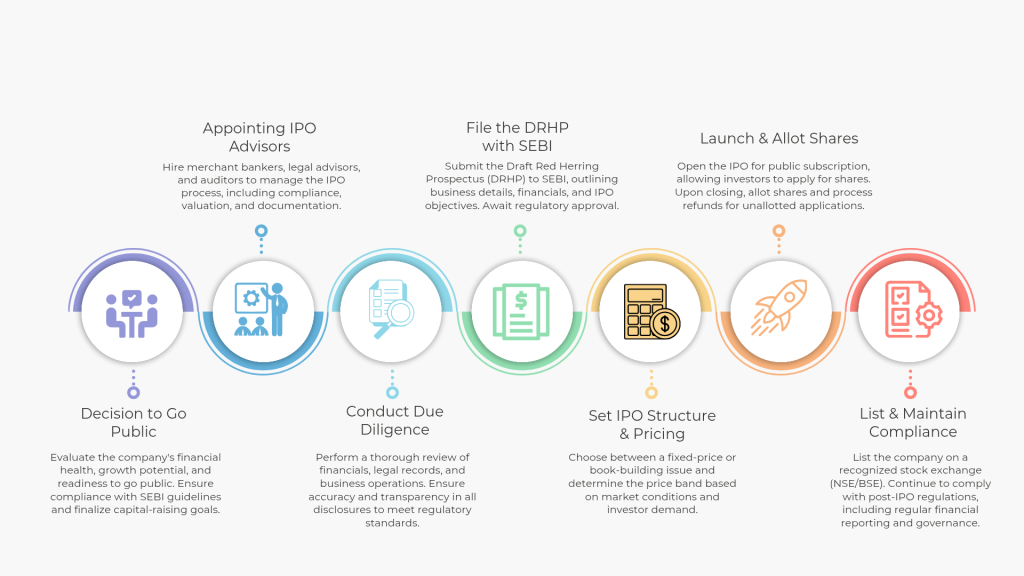
The IPO process in India follows a well-defined series of steps. Here is an overview of the typical journey an IPO takes before reaching investors:
1. Decision to Go Public
The first step for any company planning to go public is deciding to issue an IPO. This decision is made by the company’s board of directors, often after considering growth strategies, the need for capital, and market conditions. The company may also consult with investment banks or underwriters to assess the feasibility of an IPO.
2. Appointment of Advisors and Underwriters
Once the company decides to proceed with an IPO, it appoints key players such as merchant bankers, legal advisors, auditors, and underwriters. Merchant bankers act as the lead underwriters and are responsible for marketing the IPO, pricing the shares, and managing the process of getting the company listed on the stock exchanges. The underwriters play a key role in assessing the valuation of the company and help determine the offer price of the shares.
3. Filing the Draft Red Herring Prospectus (DRHP)
The company, with the help of its advisors, prepares a Draft Red Herring Prospectus (DRHP). This document contains detailed information about the company, including its financials, business model, risks, and the purpose of the IPO. The DRHP is filed with SEBI, which reviews the document to ensure that it complies with all regulatory requirements. SEBI may ask for clarifications or suggest revisions to ensure full disclosure of material information.
4. SEBI Review and Approval
After the DRHP is submitted, SEBI conducts a thorough review of the document. This review process usually takes around 30 days, during which SEBI checks for compliance with regulations and ensures that the information provided is accurate and clear. Once the draft is approved by SEBI, the company can move forward with the public offering.
5. Launching the IPO
Once the approval is received from SEBI, the company can go ahead with launching the IPO. The public issue is opened for subscription, usually for a period of 3 to 5 days. During this period, investors can submit their bids for the shares they wish to purchase. The offer is typically available to institutional investors, qualified institutional buyers (QIBs), and retail investors.
6. Pricing the IPO
The pricing of the IPO is a crucial aspect of the process. The company, in consultation with its underwriters, decides on a price band or a fixed price at which the shares will be offered to the public. The price band is usually determined after considering factors such as the company’s financial health, market conditions, and investor demand.
7. Allotment of Shares
Once the subscription period closes, the company and its underwriters allocate shares to investors based on demand. For oversubscribed IPOs (where demand exceeds supply), a lottery system or a pro-rata allocation system is used to decide which investors get shares. Typically, retail investors are allotted shares on a pro-rata basis, while institutional investors may receive shares based on their bids.
8. Listing on Stock Exchanges
Once the shares are allotted to investors, the company’s stock is listed on the BSE or NSE, where it begins trading publicly. The listing date is highly anticipated, and it marks the beginning of the company’s journey as a publicly traded entity. Investors can then buy or sell shares in the open market through brokers or trading platforms.
Platforms for Investing in IPOs in India
There are several platforms in India through which investors can participate in IPOs:
- Brokerage Firms and Stock Brokers: Investors can apply for IPOs through their brokerage firms or stock brokers. This is one of the most popular methods for individual investors. Many online trading platforms and discount brokers, such as Zerodha, Upstox, and Angel One, offer IPO investment options.
- Banks and Financial Institutions: Many banks in India also provide platforms through which investors can apply for IPOs. Banks like HDFC Bank, ICICI Bank, and SBI offer IPO applications through their net banking platforms.
- Dedicated IPO Platforms: There are also dedicated platforms like Groww, Zerodha Coin, and Upstox that facilitate IPO investments. These platforms allow investors to view upcoming IPOs, track subscription status, and apply directly through their online interface.
- Government Platforms: The National Stock Exchange and Bombay Stock Exchange provide direct access to IPO applications through their official websites. However, this requires investors to have a demat account and a trading account.
Benefits of Investing in IPOs in India Over Traditional Investing Options
While traditional investment options like mutual funds, fixed deposits, and real estate have their place in an investor’s portfolio, IPOs offer unique advantages that make them highly attractive for investors. Here are the key benefits of investing in IPOs over traditional options:
1. High Growth Potential
One of the primary reasons investors flock to IPOs is the high growth potential they offer. By investing in a company at the time of its public debut, investors have the opportunity to ride the growth wave as the company expands. Many of the most successful companies, such as Infosys, Wipro, and more recently, Zomato and Paytm, have generated substantial returns for early investors who purchased shares during the IPO.
2. Early Access to a Promising Company
IPOs allow investors to get in on the ground floor of a promising company. Rather than waiting for years to see if the stock performs well, investors can become part-owners of the company right at its launch, which can lead to substantial early gains if the company grows rapidly.
3. Potential for Listing Gains
Another major advantage of IPOs is the potential for listing gains. Often, IPOs are priced below the market value to attract investors. As a result, when the company’s stock starts trading on the exchange, it can see a significant surge in price due to high demand. Many investors have historically made considerable profits by selling their shares on the first day of listing, capitalizing on this initial surge.
4. Diversification
IPOs provide an opportunity for investors to diversify their portfolios. By adding stocks of new companies, particularly in emerging sectors like technology, e-commerce, and renewable energy, investors can reduce the risk associated with traditional investment avenues that may be dominated by established sectors.
5. Liquidity and Accessibility
Unlike traditional investments such as real estate, which can be illiquid and difficult to trade, IPO investments are highly liquid. Once shares are listed on the stock exchange, investors can easily buy or sell their holdings as needed, ensuring greater flexibility.
6. Regulatory Oversight and Transparency
IPOs in India are regulated by SEBI, ensuring transparency, accountability, and fairness in the process. Companies must disclose their financials and risks, and investors can make informed decisions based on this detailed information. This is in contrast to certain traditional investment vehicles like real estate or unlisted securities, where there may be less regulatory oversight and transparency.
7. Low Entry Costs
Unlike traditional investments such as real estate or even some mutual funds, which may require large capital outlays, IPOs generally have a relatively low cost of entry. Retail investors can participate in an IPO with as little as Rs. 10,000 or even lower, making it an accessible investment option for people across various income levels.
Conclusion
The IPO process in India offers an exciting and dynamic investment opportunity for individuals and institutions alike. With the potential for high returns, diversification, and liquidity, IPOs provide significant advantages over traditional investment options. By leveraging modern platforms, investors can easily apply for IPOs and participate in the growth of some of India’s most promising companies.